
Medical Aesthetics
Search Growth Strategy for Medical Aesthetics Clinics
A practical methodology for connecting the clinic’s real offering, search demand, useful content and a clearer path to enquiry.
The starting point
A strategy should explain
what to do next—and why.
The question is not simply which keywords to target. It is how your clinic can become easier to discover, understand and contact.
My approach connects business discovery, treatment taxonomy, search research, website structure and conversion. The depth of each stage depends on the project. The aim is a clear set of decisions and priorities that fits the clinic’s actual needs and resources.
Specialist work / Atlanta
Strategy grounded in
real search evidence.
The Atlanta project connects Maps visibility, treatment relevance and supporting website pages. Inspect the supplied map-grid screenshot, then explore the full project narrative.


A considered content structure
Different terms.
Clear relationships.
Treatments, concerns and device names need distinct roles in the website. The clinic validates the offering and clinical substance; I organize the search and content decisions around it.
Business & treatment discovery
Start with the clinic, before the keywords.
A search strategy needs to reflect the business it is meant to support. I begin with the clinic’s locations, providers, complete service list, treatment priorities and consultation model. Existing marketing channels, available content and expansion plans give the work its commercial context. If the clinic has reliable information about service demand or enquiry quality, that helps establish priorities.
The real service list matters. Competitors can reveal questions to discuss, but their offerings should never become claims about your clinic. When an apparent opportunity is not currently represented, I confirm whether it is genuinely offered before recommending a page. This first stage also identifies who will provide clinical input, approve content and implement changes, so the strategy is feasible as well as relevant.
Treatment taxonomy
Separate the concepts. Then connect them.
A treatment, patient concern, technology, device, brand and body area can all appear in searches without being interchangeable. I organize those concepts before deciding on pages. Provider and location information add another layer: a service may need specific context about who offers it or where it is available.
For example, RF microneedling, a device name and a concern someone researches may be related in a clinic’s content, but the relationship needs validation. It does not establish treatment suitability or justify three near-identical pages. A clear taxonomy gives the website a consistent language and helps prevent duplication. It also gives the clinic team a concrete map to review before content briefs or navigation structures are approved.
Meaning → Intent → Architecture
Validate relationships before creating pages.
SERP & search-intent analysis
Let search intent inform the page decision.
For important searches, I examine what appears in the results: Maps listings, treatment pages, location pages, guides, directories and other formats. A query that looks commercial in a spreadsheet may lead to a mixed research experience. Another may clearly require a local destination. Understanding that context helps establish what a useful page needs to do.
The review considers variations in wording and the balance between informational, commercial and local intent. Search volume is one input, not the whole decision. A page should have a business reason, match a meaningful visitor need and be supported by information the clinic can provide. Where the evidence is mixed, I document the uncertainty instead of assigning a new page to every keyword variation.
Give each search a useful destination
Competitor analysis
Study the competition without inheriting its blind spots.
The clinic next door is not necessarily the only search competitor. Google Maps profiles, local practice websites, treatment publishers and directories may compete for different parts of the journey. I distinguish those roles before comparing service architecture, page depth, provider information and booking paths.
The useful questions are specific: how are treatment categories organized, which concerns receive separate coverage, how do location and provider pages connect, and where does a visitor go next? I also review titles, headings, internal links and trust information. The objective is to understand the search landscape and find gaps the clinic can address with accurate, useful information. It is not to reproduce a competing site or assume that every choice on a ranking page should be copied.
Data & toolset
Choose evidence that answers the question.
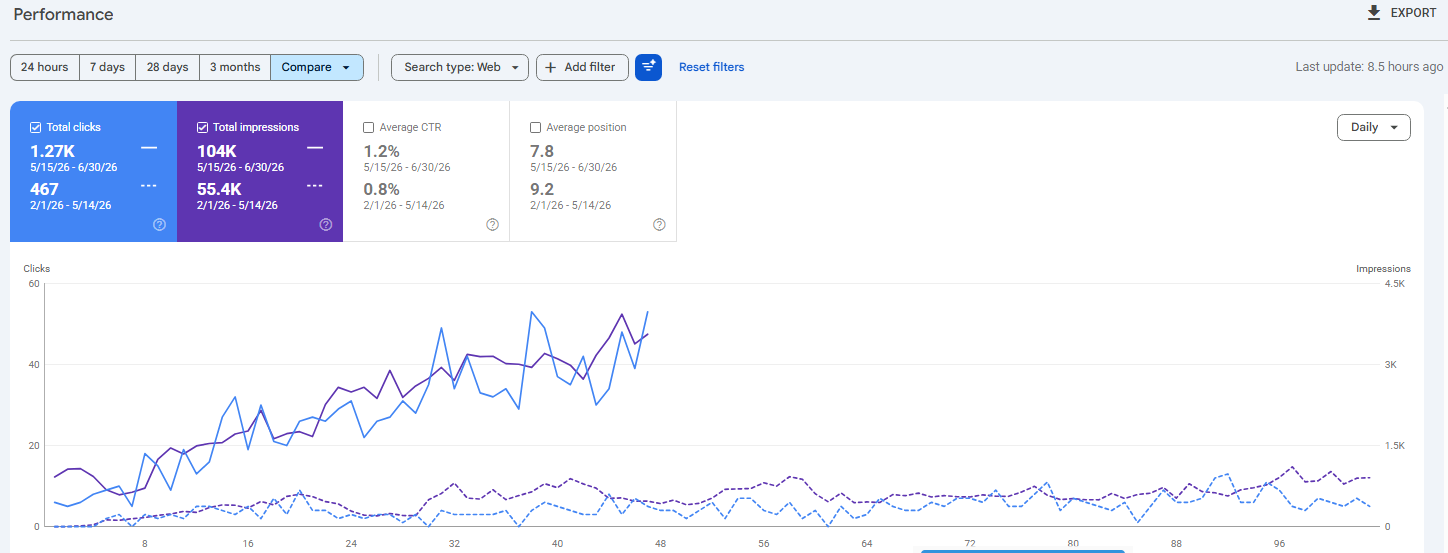
The toolset depends on the project’s access and needs. Google Search and Maps can show the current search experience. Search Console, Google Business Profile performance and existing analytics can add first-party context. Keyword Planner, Google Trends, Ahrefs or Semrush may support demand and competitor research where appropriate.
A crawl with Screaming Frog can help investigate site structure and technical barriers. PageSpeed Insights and the Rich Results Test may support specific performance or structured-data checks. No project needs every tool merely to make the audit look substantial. Each source should answer a practical question and its limits should be clear. Clinical facts require reliable professional or regulatory sources and qualified provider input; general reference sites or search snippets are not substitutes for that validation.
Query & topic research
Group questions by meaning, not just wording.
Research can include treatment, concern, local, comparison, provider, device and booking-related queries. I group these by what the visitor is trying to accomplish. Different phrases can belong on one useful page; a superficially similar query may call for a separate guide or a different type of destination.
This stage asks whether a topic deserves a dedicated page, belongs within an existing section, needs supporting content or is not commercially useful at present. It also identifies queries that might create overlap between pages already on the site. The outcome is a set of editorial decisions, not simply a large keyword list. Those decisions should be understandable to the clinic owner and specific enough for the person writing or updating the page.
A new page—or a stronger section?
- A real service or useful research topic
- Enough original information
- A clear role in the site structure
- A variation of the same question
- Detail that supports the main service
- One destination avoids overlap
Website architecture
Give every page a place and a purpose.
Once the offering and search intent are understood, I plan how the site should connect. A possible structure moves from the homepage to treatment categories and individual treatments, with providers, genuine locations and supporting guides serving clear roles. Concern pages are added where they provide distinct value and can be written accurately.
Architecture should make important information easier to discover without producing unnecessary destinations. I avoid automatically multiplying every treatment by every city. A location page needs a real business context and meaningful information. The plan also considers existing URLs and content so improvements do not discard useful work. Navigation and contextual links should then make the structure visible to people, rather than leaving it as an internal diagram.
A planning example: a clear role for every page.
Treatment page strategy
Build treatment pages that support real evaluation.
Each priority treatment page needs a defined role. Its content may include a direct introduction, relevant provider information, clinic location, approved process details, questions and a consultation option. Technology or device information belongs where it clarifies the service actually offered. Related treatments, validated concern information and guides can help the visitor continue researching.
A content brief should specify what information is needed, where it belongs and which claims require review. It should not become a licence to invent clinical details for completeness. I focus on structure, clarity, search intent and the next step in the journey. The qualified clinic team supplies or approves clinical substance, including any statements about suitability, safety or expected outcomes.
A page structure with a purpose
Descriptive links connect useful supporting content.
Readable headings, responsive sections and a clear contact route carry the structure into the build.
Semantic SEO & entity relationships
Make the relationships explicit and consistent.
A clinic website contains connected concepts: the practice, its providers, treatments, patient questions, technologies and locations. Those relationships should be evident in the architecture and content. Consistent names and useful links help prevent a visitor from having to guess whether two terms describe the same service or different offerings.
I review headings, individual content passages and contextual links alongside the larger hierarchy. Appropriate structured data can support what the page actually says, but it cannot compensate for inaccurate or confusing content. This approach also provides a coherent foundation when considering evolving AI search experiences. It is a method for organizing understandable information, not a promise that a particular platform will cite the clinic or display it in a specific result.
Connect services, people and places
Local SEO & Google Business Profile
Make the website and Maps support each other.
The profile and website should introduce the same real clinic. I review categories, services, contact information, photography, genuine reviews and booking links alongside the pages that support local discovery. Local competition and geographic relevance provide context for the recommendations.
This is broader than repeatedly adding keywords to a profile. Someone arriving from Maps should reach relevant information and understand how to contact the practice. A treatment page should connect with accurate clinic and provider details. Where appropriate, local visibility evidence helps review how the clinic appears across the target area. Changes are prioritized with the website work so the two parts of the patient journey do not develop conflicting service descriptions or destinations.
The local search system
Illustrative alignment model, not a ranking report.
Content & guides
Publish supporting content with a clear job to do.
Guides are useful when they address a genuine research question that does not fit comfortably within a treatment page. They may support comparison, explain the consultation journey or connect someone’s question with relevant clinic information. Each proposed article needs a purpose and an appropriate review process.
I do not recommend mass-producing thin informational pages just to make the site larger. A smaller set of accurate, useful guides can be easier for the clinic to maintain and connect to its services. Content planning should specify related treatment pages, internal links and any clinical input required. Existing patient questions, search queries and gaps in the current website can help identify what deserves attention first.
Conversion & patient journey
Follow the search all the way to the enquiry.
Visibility creates an opportunity; the website still needs to help the visitor continue. I review the route from a search result to the site, treatment information, provider context and enquiry option. That includes the experience on a phone and any handoff to an external booking system.
The review looks for unclear calls to action, hidden contact options, confusing forms, weak explanations and trust information that is difficult to find. Recommendations should address a specific obstacle rather than simply add more buttons. I also clarify what happens after a request reaches the clinic. Enquiries, consultations and appointments are distinct stages, and a website change should not be credited with outcomes that have not been measured.
Keep the next step clear on mobile
Real people
Relevant evidence
- ArriveMatch the message to the search.
- EvaluatePut service details and genuine trust information within reach.
- EnquireUse a clear contact or booking handoff.
- ConfirmExplain receipt and who handles the next step.
Measurement
Measure movement that the clinic can use.
Where access allows, the measurement plan can combine Search Console, analytics, profile performance, local visibility monitoring and appropriate call, form or booking tracking. Each source describes a different part of the journey. A visibility measure is not the same as an enquiry, and an enquiry is not automatically a booked appointment.
I establish the available baseline and agree what can reasonably be tracked. This may require coordination with whoever manages the website, booking platform or clinic operations. Reporting should explain what changed, what remains uncertain and what action follows. If data is missing, that limitation stays visible. A useful report helps decide where to invest effort next rather than presenting activity as business progress.
Prioritization
Turn the research into a workable order.
A strategy is only useful if the clinic can act on it. I weigh business importance, search demand, ranking opportunity, conversion value and implementation effort. These factors guide judgment; they are not a fabricated mathematical score. Dependencies also matter: a page may need factual input, development access or a booking decision before it can be improved.
A sensible order may begin with technical blockers and important profile issues, followed by priority treatment pages, architecture, internal links and conversion improvements. Supporting content and expansion can follow when the foundations justify them. The sequence changes with the evidence and the clinic’s resources. Each priority should explain the problem, the proposed work, who needs to contribute and how completion will be checked.
Turn findings into a sequence
Crawl, index and enquiry obstacles
Profile alignment and priority treatment pages
Architecture, links and conversion
Useful guides and justified opportunities
Balance business importance, demand and effort.
Continuous improvement
Use the evidence to make the next decision better.
The first architecture and roadmap establish a foundation. Search queries, page performance, competitor changes and actual patient questions can then reveal what needs refinement. A new provider, confirmed service, device or location may also change the site’s priorities and content requirements.
I use that context to revisit assumptions, improve useful pages and decide whether new content is justified. The aim is a maintained system of accurate information and clearer enquiry paths, rather than a one-time collection of audit tasks. Progress should remain connected to the clinic’s business direction, with clinical review and factual accuracy preserved as the site evolves.
The work in context
Explore the projects
behind the approach.
The Atlanta, Canada and Dubai projects bring different parts of this thinking into local search work. Their supplied screenshots provide the available visibility evidence, with no invented patient or revenue claims.
A focused conversation. A clearer direction.
Want Me to Review Your Clinic’s Search Growth Opportunities?
Start with your website, your Google visibility and the journey you want to improve.