Technical barriers around important content
Crawl restrictions, incorrect index settings, broken destinations and confusing canonical signals can affect key pages. Diagnosis comes before broad changes that might disturb useful existing content.

Local businesses & agency partners
Build a stronger search foundation for the pages that introduce your business, explain its services and support qualified enquiries.
A planning example: a clear role for every page.
What the service is
Website SEO connects technical reliability with the purpose and organization of your pages. I review whether important content can be crawled and indexed, whether pages address the right searches and whether the website makes relationships between services, providers and locations clear.
The output is a prioritized plan for the existing site, with implementation where agreed. It should be useful to the business owner, content team and developer: what needs attention, why it matters and how to check the change. An audit becomes valuable when its findings lead to a workable sequence of improvements.
Why it matters for your business
A local business website often grows one service page at a time. Menus can become unclear, similar pages can compete for the same purpose and older content may stop reflecting commercial priorities. Attractive pages can still be difficult to discover when the structure behind them is weak.
Search visibility and visitor experience share useful foundations. Clear hierarchy helps people find a service. Relevant internal links help them research further. A fast, stable mobile page makes it easier to continue to the enquiry stage. These decisions work best when considered together.
Crawl restrictions, incorrect index settings, broken destinations and confusing canonical signals can affect key pages. Diagnosis comes before broad changes that might disturb useful existing content.
Overlapping service pages can make their purpose unclear. I review whether they should be differentiated, consolidated or reorganized, with redirects and internal links planned where needed.
Important services can end up disconnected from related content or several clicks away. Architecture and internal links bring them into a more coherent browsing journey.
The strategy, made visible
Connect services, people and places
What is included
The exact deliverables depend on your business’s starting point, access and priorities.
Review available crawl data, status codes, index directives, canonicals, redirects and sitemap coverage. Separate obstacles affecting priority pages from lower-impact cleanup. Recommendations consider the live site, its platform and the risk of changing established URLs rather than treating every audit warning as equally urgent.
Assess whether titles, primary headings, introductions and content sections reflect a distinct visitor need. Compare page purpose with relevant search results. The goal is a clearer service or business page, with useful metadata and a logical content structure, not keywords repeated in every heading.
Map how service categories, individual services, provider information and supporting content connect. Identify orphaned pages, overlapping topics and missing contextual links. Appropriate structured data can support accurate content, without adding invented reviews, business details or unsupported claims.
Review mobile behavior, image handling, layout stability and Core Web Vitals considerations where evidence is available. After agreed changes, check important routes, redirects, headings, metadata, internal links and enquiry destinations. Recommendations respect the existing platform and avoid unnecessary features or plugins.
The process
Review the platform, priority pages, available Search Console access and previous changes. Establish which services and enquiry routes matter most before investigating technical details.
Combine crawl evidence with page review and search intent. A technical symptom may point to an architecture or content decision, so recommendations explain the relationship.
Separate blocking issues, important page improvements and longer-term opportunities. Agree responsibility for development and content so the plan is practical for the people implementing it.
Check changed pages and connected routes, then review available search data. Record what changed so future decisions have a baseline and implementation context.
From review to implementation
From discovery to useful content
A practical application
Page and profile decisions should reflect the services your business genuinely offers and the questions prospective customers bring to search.
Explore the service-page decision guide for the reasoning behind page scope. My industry experience includes a specialist focus on Medical Aesthetics.
Illustrative scenario
Imagine a business with two pages describing the same offered service under slightly different names. Before creating a third destination for another query variation, I would review their content, search intent, existing visibility and links.
The answer may be one stronger destination or two clearly differentiated pages. If consolidation is appropriate, the plan includes redirects and updated internal links. The decision protects useful content while giving visitors a clearer route towards the business’s enquiry information.
Related project & proof
The Canada project considers page structure, internal linking and service representation alongside local and broader search visibility. Its screenshots support the search narrative without implying an unsupported conversion result.
Explore the Canada project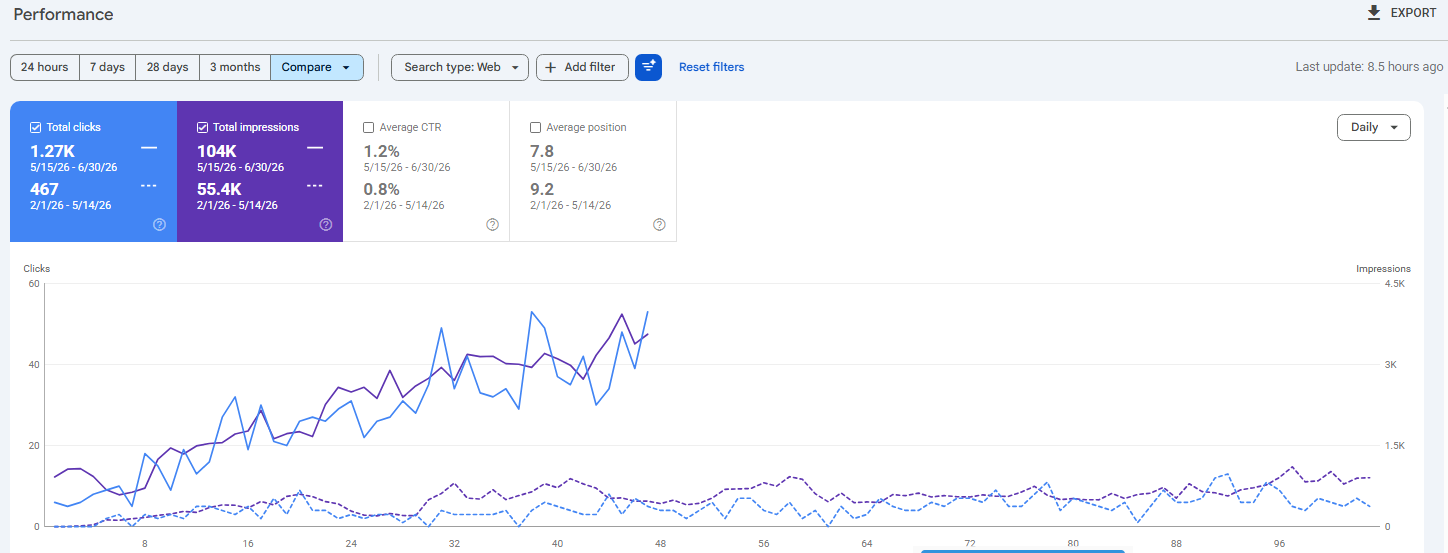
Related services
The practical details
Clear expectations before we begin.
Only if the current site’s limitations justify the discussion. Many issues can be addressed through technical corrections, page structure and content. WordPress design is available separately when a new foundation makes commercial and practical sense.
The scope can include an implementation plan for your developer or agreed hands-on work. Clear priorities, affected pages and validation steps help the team understand what to change and reduce ambiguity during delivery.
No. Technical foundations help important pages function and be understood, while useful content addresses the visitor’s question. The review considers both and can connect with deeper service-page and semantic SEO work when required.
A focused conversation. A clearer direction.
Start with your website, your Google visibility and the journey you want to improve.