One page for every keyword variation
Near-identical pages often compete for the same purpose. I examine intent, existing search visibility and content overlap before proposing a separate URL or consolidating established pages.

Local businesses & agency partners
Turn a collection of keywords into a coherent plan for services, supporting content and the links that help visitors move between them.
One service, connected questions
Supporting pages answer distinct questions and link back where the service is relevant. These entity relationships inform the brief and the links.
What the service is
Semantic SEO and content strategy organizes your website around meaning, search intent and the services your business actually provides. An entity might be a service, a business, a place, a product or a person. The useful work is explaining their real relationships in language and structure that visitors can follow, rather than adding technical vocabulary to otherwise thin pages.
I combine business discovery, SERP analysis, query clustering and a review of existing content to decide what each page should do. Deliverables can include a service and topic architecture, a query-to-page map, prioritized content briefs and an internal-link plan. The scope can support a local business directly or give an agency a documented strategy for its writers and developers.
Why it matters for your business
Your service menu and your customers’ search language often differ. A homeowner might search for a repair, describe a problem or compare replacement options. Those starting points can lead to the same business without requiring identical landing pages for every variation. Good architecture connects the question to a relevant service and a sensible next step.
A larger content inventory is not automatically a stronger website. Overlapping pages consume writing and maintenance time, divide attention and can leave visitors uncertain about which destination matters. A defined page purpose helps direct investment towards useful commercial content, supported by guides where an explanation needs its own space.
Near-identical pages often compete for the same purpose. I examine intent, existing search visibility and content overlap before proposing a separate URL or consolidating established pages.
Services, questions and locations may exist on the website without useful connections. A topic map reveals which relationships need explanation and where a contextual link would help.
Writers need a clear audience, page role, evidence requirements and section plan. Repeating a target phrase does not supply the original business context a visitor needs.
The strategy, made visible
Give each search a useful destination
What is included
The exact deliverables depend on your business’s starting point, access and priorities.
Confirm offered services, delivery areas, audiences, terminology and commercial priorities. Separate a service from its category, a problem it addresses, a brand it uses and a location it serves. Record relationships the business can support. Competitor content suggests questions to investigate; it does not establish facts about your offering.
Review the kinds of pages appearing for representative queries and assess informational, commercial and local intent. Group phrases by shared purpose, rather than shared words alone. Document mixed results and uncertainty. The output maps each useful cluster to an existing page, a proposed page, a section or a deferred opportunity.
Define the hierarchy of hubs, commercial pages and supporting guides. Briefs specify the intended reader, the question being answered, useful headings, original information to gather and the next action. Information gain comes from accurate business detail, useful distinctions and clear explanations; it is not a target word count or a list of unrelated entities.
Connect related services, guides and genuine location information with descriptive links that explain why the destination is useful. Review cannibalization as a question of competing purpose and observed search behaviour. Where consolidation is justified, plan redirects and updated links; where pages deserve to remain separate, give them distinct scope and introductions.
The process
Collect the service list, existing URLs and available search data. Identify the pages that matter commercially and the people who can supply original operational detail.
Inspect representative results and group queries. Compare the language people use with the business offering, recording both the evidence and the judgment behind page decisions.
Deliver an architecture, priority briefs and links between related destinations. Agree ownership, review requirements and a workable publishing order before commissioning content.
Check drafted pages against their intended purpose. After implementation, review available query and page evidence to identify overlap, missing sections and opportunities worth developing next.
From review to implementation
A new page—or a stronger section?
A practical application
Page and profile decisions should reflect the services your business genuinely offers and the questions prospective customers bring to search.
Explore the service-page decision guide for the reasoning behind page scope. My industry experience includes a specialist focus on Medical Aesthetics.
Illustrative scenario
For a hypothetical HVAC business, AC repair and air conditioner repair may describe the same service and fit one strong page. Replacement could deserve its own destination when it is genuinely offered and answers a different commercial question. A troubleshooting query may belong in a supporting guide rather than another sales page.
The decision still requires local result review and business input. The repair page could explain scope, service area, how to request help and what information to prepare. A guide can link to it when relevant. The same reasoning applies to cleaning services, remodeling work and specialist clinic content, with terminology and review needs adapted to each business.
Related project & proof
The Canada skin-clinic project provides a specialist example of service relationships, website architecture and semantic coverage alongside supplied local and AI search screenshots. It illustrates the search approach; no broader industry client or numerical outcome is implied.
Explore the Canada project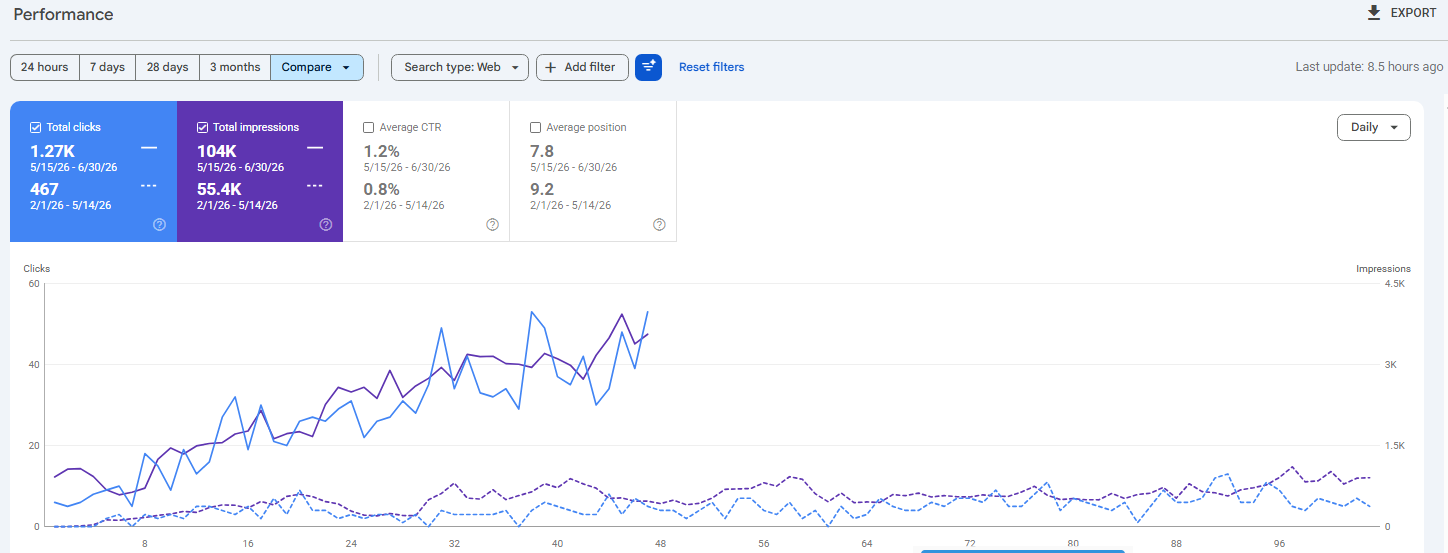
Related services
The practical details
Clear expectations before we begin.
No. A topic needs a distinct purpose, business relevance and enough useful information to justify a destination. Otherwise it may belong in a section, a supporting guide or outside the current plan. Existing pages are reviewed before adding URLs.
Yes. The agreed scope can provide query mapping, page briefs, internal links and priorities for an existing team. Clear acceptance criteria and factual-review responsibilities make the handoff easier to implement and assess.
No. Clear service relationships and accurate content make a website more coherent, but no architecture or schema guarantees inclusion in an AI answer. Search visibility should be reviewed using available evidence, with uncertainty made explicit.
A focused conversation. A clearer direction.
Start with your website, your Google visibility and the journey you want to improve.